Thursday, June 26, 2014

||  Shree Hari   ||
Purity in Diet
आहार-शुद्धि
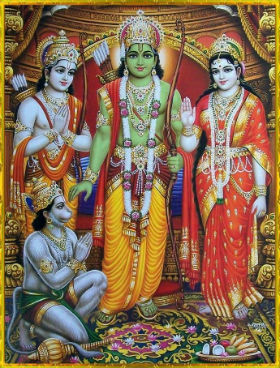
Shri-Ram-20140619-01-sm.jpg

There are many causes in the development of man’s natural tendencies, mental state and inner sentiments (feelings).   Of them, food is also one of them.   There is a saying that ‘As is a man’s diet, so is his mind’  The more pure one’s diet, man’s tendencies become that much purer.  in other words, in having pure tendencies,  one gets aid from a pure diet.   

In Gita,  independent description of foods does not take place, rather through the description of the individual (consumer), the description of the food takes place;   just as the pure foods are dear to a “sattvik”  (pure) person,  just as rajasik (induce passion, high activity) foods are dear to a “rajasik” (passionate) , and tamasik foods (that promote inertia) are dear to a “taamasik” (inertia) person, has been described.   (Gita 17/8-10)  Therefore wherever in the Gita there is talks of food, there God has described the consumer of that food;  just as in the words ‒‘नियताहाराः’ (४ । ३०) niyataahaaraah (Gita 4/30),  one who is regulated in his food habits, and from the verse ‘नात्यश्नतस्तु योगोऽस्ति न चैकान्त-मनश्नतः ।’(६ । १६) addresses those individuals who eat too much and those that don’t eat at all, and from the verse ‘युक्ताहारविहारस्य’ (६ । १७) "yuktaahaarvihaarasya” (Gita 6/17) he who is regulated in diet and  eats and lives on the essentials has been described,  and from the words ‘यदश्नासि’ (९ । २७) “yaddashnaasi”  (Gita 9/27) he who offers the food items to God has been described and with the words ‘लध्वाशी’ (१८ । ५२) “ladhvaashi”  (Gita 18/52),  he who lives on very scanty food,  the bare minimum, has been described.   

The three modes of nature,  sattva, (mode of purity), rajas (mode of activity) and tamas (mode of inertia) have been sequentially described in the Gita.  Even though there is a predominance of purity in a man of the mode of purity,  alongside, there is also sentiments of rajas-tamas (mode of activity and inertia).   There is predominance of mode of activity in a passionate man, then too alongside, the sentiments also satvik-taamasik, remain within.   In a Taamasik man, even though there is predominance of mode of inertia, ignorance, delusion, alongside the sattvik and rajasik sentiments remain.  The reason for this is that the entire creation is made up of these three modes of nature (Gita 18/40).  The two modes are suppressed and one becomes predominant.  (Gita 14/10).  Though a man of purity,  naturally likes pure objects, then too due to the blending of the three modes,  or due to previously having  consumed objects of the mode of passion and inertia, or there being something lacking in the body, or due to the body being sick, occasionally,  he desires raajasik-taamasik foods.   Like he desires lot of salt or to consume salty things,  or to eat half cooked greens etc.  

Even though a “Raajasik” man naturally likes “rajasik” foods,  but due to there being a blend of all three modes of nature,  or previously  due to the practice of consuming sattvik and taamasik foods or some other reason, occasionally there is a desire to have sattvik-taamasik foods.  Just as he who has previously had milk, cashews, pistachios, almonds etc., but due to a sickness and on becoming weak,  for gaining strength, he desires “saatvik” (pure)  foods.  Like that, sometimes he also desires garlic, onion and other foods that have a tamasik disposition.  

Even though a man of taamasik (inertia) disposition, naturally likes taamasik food,  but due to there being a weakness in the body,  he will desire saatvik food such as milk, ghee etc.,  and foods that are sour, salty and other rajasik foods.   (to be continued) 

 From book in Hindi ‘ Aahaar Shuddhi’ by Swami Ramsukhdasji

Wednesday, June 25, 2014

||  Shree Hari   ||
Renounce Sense of Mine-ness (Attachment)
ममताका त्याग


continued....

If you inquire deeply on the point that, are we living due to having a desire to live?  Can someone stay alive simply by desiring and wanting ?  No one can remain alive simply by desiring.   I do not object to trying to find ways to stay alive.   Eat food, take medicines,  follow a disciplined approach to life -  this is what I am saying.   But it is not in our hands that may I continue to live.  What objections do you have to what is being said here?  Tell me !

On the contrary, you must be thinking that why doesn’t he stop talking ?  Let me ask such a question, that he is unable to reply.  You do not ever think that how do I put to use, what is being said here ?  Just as with the various laws that are imposed, your mind is working on ways and how to dodge these laws?  it is thinking, how can I lie and cheat ?  how can I spoof them ?  You conduct yourself in the same way with others as well.  It is not a good thing to do so.   You must think that how can I get detached (free from sense of mine-ness)?   How can I be free of desires ?  For this one has to think,  there is no effort involved.   Let the things remain as they are,  do not spend a single penny; but accept that “they are not mine”. For a believer in God, there is one very simple solution, that “these all belong to God.’   This is the truth.  One who believes in God, regards all things as belonging to God.   Now tell me,  will the attachment leave or not ?  This is not ours at all,  it belongs to Thakurji (God).   Now if the things go away, then it is God’s things that went way.   It is our job to protect these things to keep them carefully; because these belong to God.  Therefore how can we uselessly allow God’s things to be destroyed !

We will use these things as directed by God;  because these are His things.  What an easy solution this is !  Accept thing with a firm conviction from within.  Now if the son dies, then why should we worry ?   God’s child has died.  You can include them in your count of children - saying I have so many children.   What is the harm in doing so.  Only leave the sense of mineness (attachment).   Raise the child and provide for it, protect it.   Fulfill your responsibility.  It is the duty that has been assigned to you by God.  When sitting in the car, you say that this is my train compartment,  but once you get off the train, do you ever send a letter asking how is my compartment ?  Therefore in relating with the world, let there be nothing wrong in calling the child yours.    Be proper in dealings.  Just as you are doing at present, but even more properly.   I am not concerned about my things, but this belongs to God !  I must protect it and take care of it.   

I am saying this to you to get rid of your pain and suffering.  I am not saying this to get rid of your things, to give them up.   I am not saying to leave the things and become a “sadhu”.   I am saying so, to get rid of your sorrow, vexation, feeling of lack of things, anguish, and turmoil.  It is the same house, same wife, same family, same money,  and you are the same, there is nothing that has changed,  only the worries will go away.   ! But when there is sense of mine-ness (attachment), then worries, turmoil, sorrow, vexation will never go away.  It is impossible that worries, turmoil will not exist, when there is sense of mine-ness and desires.  If you have the desire in your mind that this should be like this, and this should not be like this, then without any doubt, there will be turmoil.   

to be continued.....

 From book in Hindi ‘ Satsang ka Prasaad’ by Swami Ramsukhdasji

Tuesday, June 24, 2014

||  Shree Hari   ||
Renounce Sense of Mine-ness (Attachment)
ममताका त्याग


continued....

Questioner ‒  food and clothes are the essential needs of man,  but these are not readily and easily available to many ?

Swamiji ‒ Even a millionaire, or a billionaire may have to go hungry. If the doctor prevents one from eating, then even if you have millions of rupees with you,  then too you cannot eat food.  That is, if you do not get food and clothing, then there is not a need.   The essential needs will be definitely met. It is clearly stated ‒‘यदस्मदीयं न हि तत्परेषाम्’ in other words, others cannot get, those things that we are supposed to get.  How can those things that are ours, stay apart from us  ? They will have to come to us.  If there is someone who is hungry and going to die,  then he will have to die being hungry.   It is not essential that one will get food and water only.   I have given these two  analogies to make you understand from the ways of the world, indicating that food and water are essential needs, but when one eats for taste, then it is a desire.   In reality the need is only of God and desires are of the world.   Whatever may be the worldly wishes, it is only a desire, and desires will never get fulfilled.   The essential need for God (Paramatma) will never go away, whether you know it or not, whether you believe it or not.   Even if you become an atheist, then too, the desire for Paramatma will not go away from within.   The reason being that he who does not believe in God at all,  he too wants to live every breath and eternally.  He wants complete knowledge, and he desires happiness and peace.   This desire is the desire for the embodiment of Existence-Consciousness-Bliss, i.e. Sat-Chit-Anand God.  The desire to remain alive at all times is the desire for “Sat”.  Wanting knowledge, it is the desire for consciousness,   and desire for happiness, is the desire for “bliss”  (anand).   Even he who criticizes God,  who wants to eradicate the name of God from the face of this earth,  such an atheist,  a non-believer too longs for God from within.   Does he not wish to live?  Does he not desire knowledge?  Does he not want happiness ?  If he does want these then his desire is for Paramatma (God, Supreme Reality).  No one can get rid of this want,  because this is our real and genuine need,   to live forever, the quest to know, and real hunger for happiness.  This will never go away, rather it is the kind that will never get satiated.  Worldly desires have never been fulfilled, they will never be fulfilled,  they can never be fulfilled.   You too have seen that in this life, all desires have not been fulfilled.  Now what is barring you from giving them up ?

Questioner ‒ if we accept that we have renounced everything,  then simply by this acceptance, will God be realized ?

       Swamiji ‒ No.  This is not some play.  If you leave the desire from within then only will it go away.   Simply saying that I have left all desires,  what can happen ? It wont happen just by accepting superficially.  If there is no desire to live, then if you die right now, then too OK.   You will neither die from not desiring to live, nor by wanting to live, will you escape death.  You will have to die, even on not wanting - this is the absolute truth that I am sharing with you.     

to be continued.....

 From book in Hindi ‘ Satsang ka Prasaad’ by Swami Ramsukhdasji

||  Shree Hari   ||
Renounce Sense of Mine-ness (Attachment)
ममताका त्याग


One develops a sense of mine, towards the things he owns, and one develops desires for the things he does not possess.   Therefore have no attachment towards things that you have,  and do not desire new things,  then simply by these two points, there is liberation. That which is called liberation,  which is a rare post,  that which the saints, sages, contemplative and great souls have realized,  that which is called “akshar” ‒‘यदक्षरं वेदविदो वदन्ति’,  that even the celibates observe celibacy in desire for its attainment ‒‘यदिच्छन्तो ब्रह्मचर्यं चरन्ति’, that which the men who are free from attachment can attain ‒‘विशन्ति यद्यतयो वीतरागाः’, attainment of that eternal post is possible simply by this point,  that do not have “sense of mine-ness” attachment for the things that are acquired, and do not desire those things that you do not have !

I do not say that you destroy,  throw away,  burn off the things that you have received.   Let the things remain as they are,  but do not have a sense of mine-ness (attachment) for them.   Now while they are there,  how do we not have a sense of mine-ness for them ?  See !  it is in your experience.   You do not put it into practice.  Just as there is a desire in your mind to get your daughter married, and you get her married.  After getting her married,  you do not have the same level of attachment (sense of mine-ness) with her.   She was your daughter, and you used to say that this is my daughter;  however, after marriage,  do you have the same level of attachment?  Therefore you know how to leave “mamta”  (sense of mine-ness).   Isn’t it?  Pay attention to this point.   

Questioner ‒ the attachment towards your daughter,  goes away on its own, without any effort,  however,  the attachment towards things does not leave ever after making an effort  !  

Swamiji ‒ Even the sense of mine-ness (attachment) towards the daughter,  leaves after much effort,  Maharaj ! It costs money to leave her;  you have to concern your-self with many people -  brother-friends, relatives, neighbors, etc.  !  You do not have to do as much to leave the attachment for things (objects).    I am saying that while the things are with you,  leave the attachment for them.   For leaving their attachment,  you will neither have to call any men, nor will you have to give them food, nor will you need to decorate the house !  So much work goes into the wedding of your daughter ! The millionaires and billionaires become very worried.    But in spite of all the difficulties, you are able to easily leave that sense of mine-ness with your daughter, then what is the difficulty in leaving this "mamta" this attachment, this sense of mine-ness  ?

I tell you another point !  just as you wish to give me clothes and I take the clothes, then your attachment goes away, doesn’t it ?  Therefore you know how to leave attachment, don’t you ?  Giving away your daughter is a big charity,  to give away a small piece of cloth, is a small charity.  Whether a charity is big or small,  there is no difference in it.  You have to leave the sense of mine-ness.  That is the main point.   It is not about the value of a big or small thing, the value is in giving up the sense of mine-ness (mamta); because liberation is from giving up sense of mine-ness.   

to be continued.....

From book in Hindi ‘ Satsang ka Prasaad’ by Swami Ramsukhdasji

Monday, June 23, 2014

||  Shree Hari   ||
Renunciation of Egoism
अहंताका त्याग
continued....

‘I-ness’ is the name of the blending that takes place.  I am sharing with you the main points of removing this blending (melting).  It is my eternal quest to very easily attain enlightenment, to realize the essence !  The sense of I-ness is revealed,  one is aware of it.   You are entirely separate from that sense of I-ness - this is plain and simple truth that I am sharing.  In fact there is no I-ness.  If a man had egoism, then he would not be able to become free of egoism.   Therefore there is no egoism.   In this world there is nothing that is so blatantly false, untrue like sense of I-ness !  If there is anything that is useless in this world, meaningless, then it is the sense of I-ness.    Egoism is the kind that is most useless, most base, most meaningless.  Just as in relationships,  money is the most worthless thing.  It is even more filthy than urine and sewage.  In the same way, this egoism is the most worthless of all, and it is non-existent.    Can anyone remove the rays and torridness from the Sun ?  Can anyone remove the heat and light from the fire ?  No,  they cannot remove it.   Only that can be removed which is separate in the first place.  Man can become free of sense of I-ness and Mine-ness, which proves that in fact there is no egoism or attachment (sense of mine-ness) in him.  Therefore I-ness and mine-ness is only imaginary.  

The “self” (swaroop) is an embodiment of Existence-Consciousness-Bliss (Sat-Chit-Anand). The Supreme Being,  and what is mine !  God !  If the sense of I-ness is there in Consciousness (chetan), then it will go away, and only consciousness will remain.    If there is sense of mine-ness with God, then that mine-ness will go away and only God will remain.  From the perspective of Jnanayog,  I am pure, enlightened, eternal conscious element and from the perspective of Bhaktiyog,  I am only God’s -  if you accept this then it is a very good mechanism for removing egoism (sense of I-ness) and attachment (sense of mine-ness) and it can very easily go away.  

Only God is mine,  no one else is mine ‒ ‘मेरे तो गिरधर गोपाल दूसरो न कोई’ “Mere toh Giridhar Gopal,  doosero na koyi”.   The family, body, senses, mind, intellect, life-breath etc.  nothing whatsoever is mine.  ‘God is mine’‒ many will accept this point,  but they will not accept that “no one else is mine.”  There is no one else that is mine -  due to not accepting this point,  one cannot develop exclusive devotion.  The glories are only of exclusive devotion.  God has said for  a devotee with exclusivity, that I am easily attainable. ‒‘तस्याहं सुलभः’ (गीता ८ । १४)  and He even brings full security and personally attends to their needs ‒ “yogakshemam vahaamyaham” (Gita 9/22)  ‘योगक्षेमं वहाम्यहम्’(गीता ९ । २२) ।
       Man has regarded God as a member of the family.   Just as mother and father, brother-sister, wife-son,  like that there is one God also that is our family member.   Today, man does not regard God as his own, as much as he regards his wife and child.   If the family forgets,  if someone dies, then we feel sad,  but if we forget God then there is no concern whatsoever !  We  have regarded God as someone ordinary.  Test and see for yourself, that how much you are revering God, then you will come to know. If you have forgotten the Divine Name of the Lord, then it is OK,  but if you forget five rupees somewhere, then it troubles you immensely.  If time is wasted away, without remembering God, this does not jar you !   The amount of time you have received,  you will not get a moment more than that,  but you can always get more money.  All the time is being spent away,  and when it is all used up, you will have to die.    But  surely you don’t have to die if all the money is spent  ! Time is the support of your life, but you are not attentive towards it at all !  You are living in an unconscious state.   So low have your tendencies and practices become, it has crossed all limitations.  

Narayan !  Narayan !! Narayan !!!


From book in Hindi ‘ Satsang ka Prasaad’ by Swami Ramsukhdasji

Sunday, June 22, 2014

||  Shree Hari   ||
Renunciation of Egoism
अहंताका त्याग

continued....
One assumes a relationship with the body, by having a sense of I-ness and a sense of mine-ness with it.   Just as the senses are mine, eyes are mine, ears are mine, nose is mine.  If one eye is not good, then you say I have become one-eyed.   If both eyes have gone bad, you say, I have become blind.   By keeping yourself in the eye,  I have become one-eyed, I have become blind.  The relationship of sense of I-ness is less, and the relationship of mine-ness is main with the world.   Whereas, with the body, the relationship of sense of I-ness is main, and sense of mine-ness is less.  In the mind-intellect,  the relationship of a sense of I-ness also takes place and also of sense of mine-ness.   There is attachment (sense of mineness) even in egoism,  but that attachment appears to be ancilliary, and the sense of I-ness appears to be main.  We have established egoism in us, therefore that sense of I-ness (egoism) is seen as mine.   What is my egoism (ahankaar) ?  When a blow comes upon my ego, then the blow comes on me as well !  This is a very subtle point.

Mainly karmayog is one that eradicates the sense of mine-ness, i.e. attachment (mamta), and jnanayog mainly removes the sense of I-ness (ahamtaa).  When attachment (sense of mine-ness) is wiped out,  then I-ness (egoism) is wiped out. And when I-ness goes away,  mine-ness is wiped out.  Both I-ness and mine-ness go away at the same time.  
  
The body, sense organs, inner faculties,  life-breath, mind, intellect, knowledge, post, abilities, entitlements - these all put together and the one “I”.   By careful examination of this blended “I”, one attains knowledge,  in other words, the knowledge that these bodily objects  are apart from me. You will begin to see that they are not my true self (swaroop).   The blended “I” cannot see any such thing.  It is totally blind !

In Gita, in all three yogas,  Karmayog, Jnanayog and Bhaktiyog ‒ there is talks of renouncing the I-ness and mine-ness.  

Just as it has come in Karmayog ‒
निर्ममो निरहङ्कारः स शान्तिमधिगच्छति ।
                                                                                     (२ । ७१)
Nirmano nirahankaarah sashaantimadigacchyati  ||   (Gita 2/71)
He who without the sense of mine and egoism (I-ness),  shuns the thirst for necessities of life, attains tranquility.  71

In Jnanayog it is said ‒
अहङ्कारं बलं दर्पं   कामं  क्रोध परिग्रहम् ।
विमुच्य निर्ममः शान्तो ब्रह्मभूयाय कल्पते ॥
                                                                                  (१८ । ५३)
Ahankaaram balam darpan, kamam krodham parigraham | Vimuchyanirmamah shaanto, Brahmabhooyaaya kalpate(Gita 18/53)
"Free from egotism and mine-ness, he rests in comprehensive Brahma ."

In Bhakti yog it is said ‒
निर्ममो निरहङ्कार समदुःखसुखः क्षमी ।
                                                                                (१२ । १३)
"Nirmamo nirahankaarah samudukhah kshami"  (Guta 12/13)
"Free from ego and sense of mine, he is balanced both in pain and pleasure."

Saints have called this renunciation of me (sense of I-ness) and mine (mineness).  True renunciation is in fact renunciation of me and mine.   Leaving things and objects and walking away is not renunciation.   This renunciation takes place when one dies !  On death, the body, house, etc.  is not even remembered.   There is no remembrance of anything in the previous birth.  But this is not true renunciation.  That is only a change of me and mine,  all you have done is taken it from here and placed it there.  Just as one says “I am a householder”‒ and this tag is lifted and a new tag is placed in its place “I am a sadhu”.   However,  surely on changing the tag,  one cannot attain liberation !  Liberation takes place on severing relationship. (to be continued)

From book in Hindi ‘ Satsang ka Prasaad’ by Swami Ramsukhdasji